09-09 2026
Expocasa Unveils Two Designer Collaborated Collections at 2026 Pudong Furniture Fair
From September 8 to 11, 2026, the 31st China International Furniture Fair took place at Shanghai New International Expo Centre. Zunshang, a sub-brand under Expocasa, concurrently launched two collaborative collections: CHI, co-created with fashion designer Zhang Chi, and Windsong Gallop, co-created with architect Wu Wenbo.
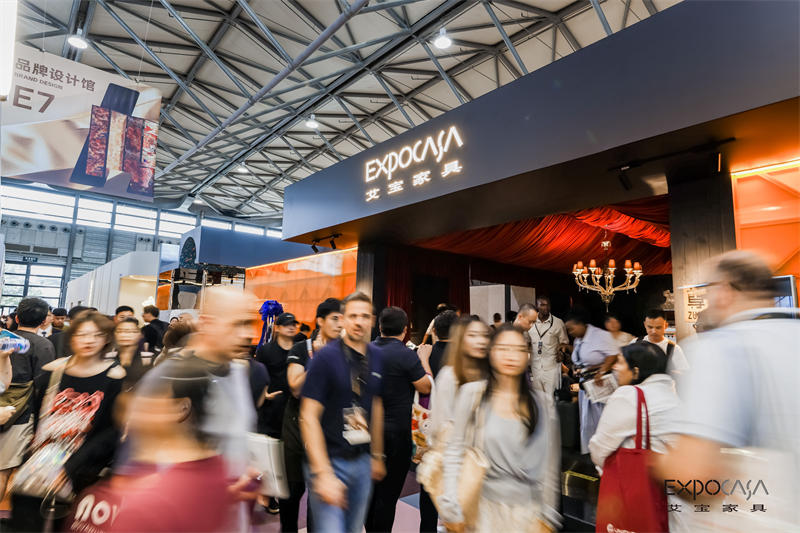 Since the launch of its “Designer Partner Programme” in late 2017, Expocasa has partnered with interior designer Zeng Jianlong, furniture designer Zhou Chenchen and industrial designer Yang Mingjie. The addition of Zhang Chi and Wu Wenbo marks another milestone in the brand’s journey.
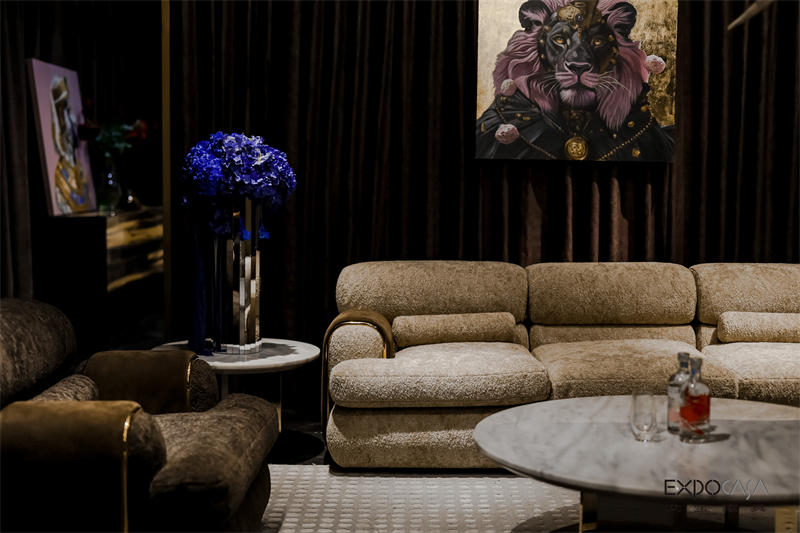
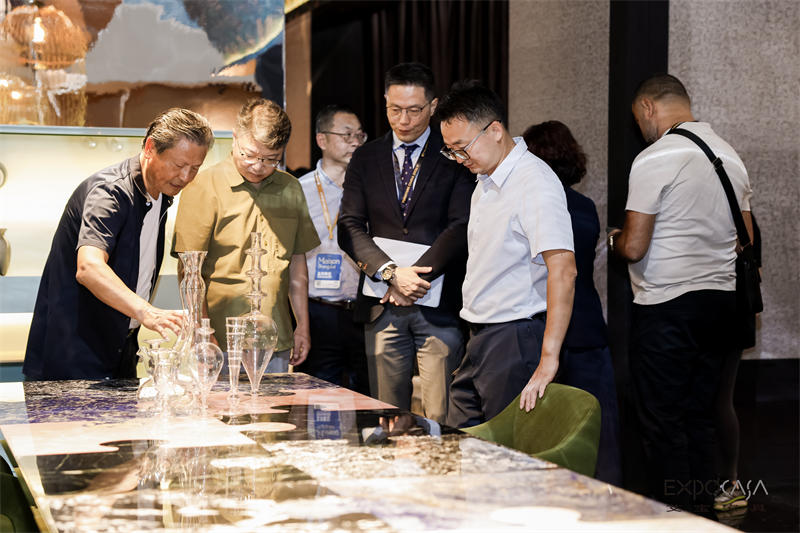
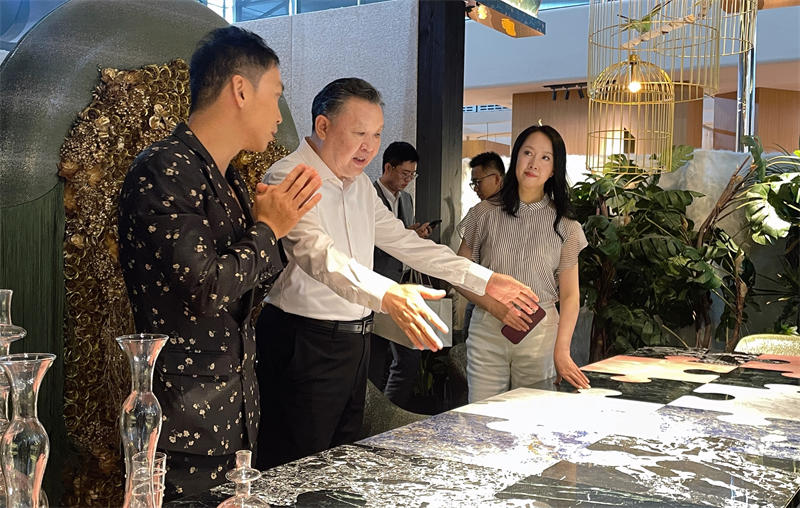
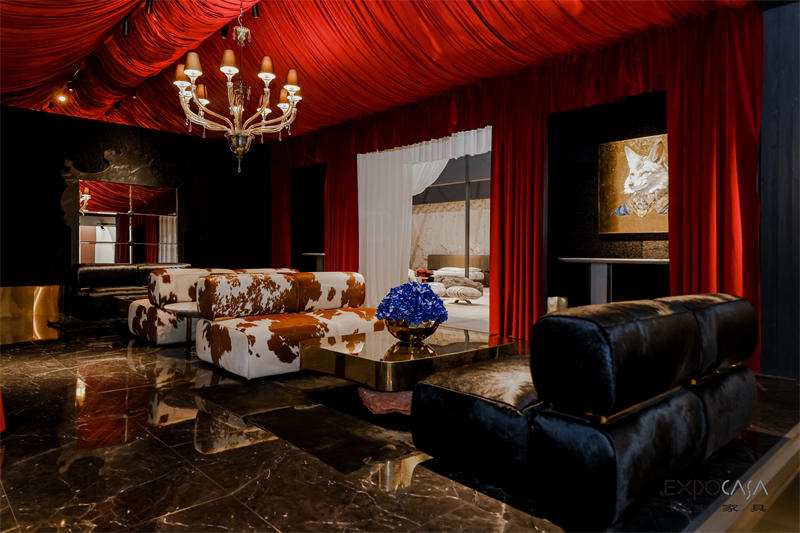 At the exhibition, the CHI collection was presented within wine-red drapery. Against this theatrically charged backdrop, each piece delivers striking expressiveness and self-assurance. In a serene, spacious beige setting, the Windsong Gallop collection exudes restraint and order, creating a sharp visual contrast with the dramatic adjacent zone. The booth drew steady crowds throughout the show, including dedicated designers and overseas buyers. Many visitors paused to examine fabric and craftsmanship in detail, offering highly favourable feedback.
Zhang Chi Makes His Furniture-design Debut
Fashion Craftsmanship Transposed to Living Spaces
Wang Mingliang, Founder of Expocasa, mapped out a clear brand vision years ago: to embrace diverse creative voices through cross-disciplinary designers. Zhang Chi, a forward-thinking fashion designer known for cross-border thinking, came to Expocasa’s attention in 2025.
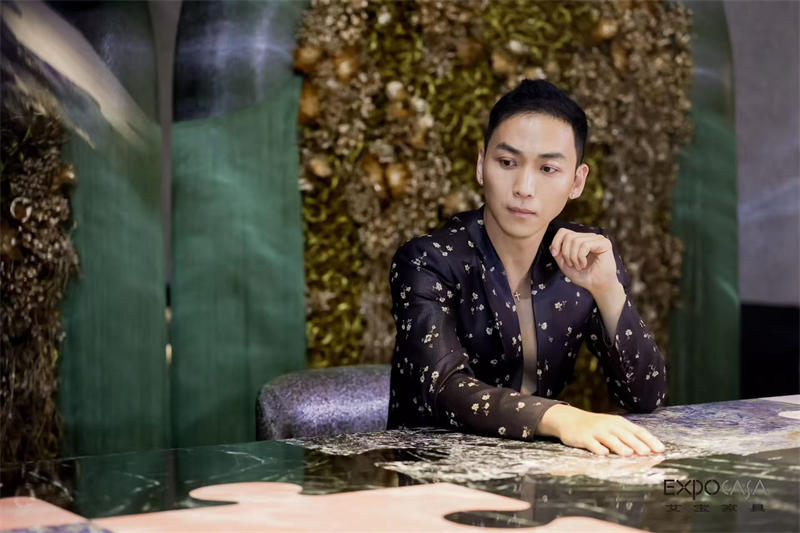 This marks Zhang Chi’s first foray into furniture design. For the CHI collection, he adapted fashion-making techniques including distressing, collage and irregular stitching to furniture production. A standout piece is a puzzle-style dining table assembled from multiple stone varieties.
Stones sourced from disparate regions form bold, playful combinations, representing yet another leap in Expocasa’s composite-material craftsmanship after multiple rounds of refinement.
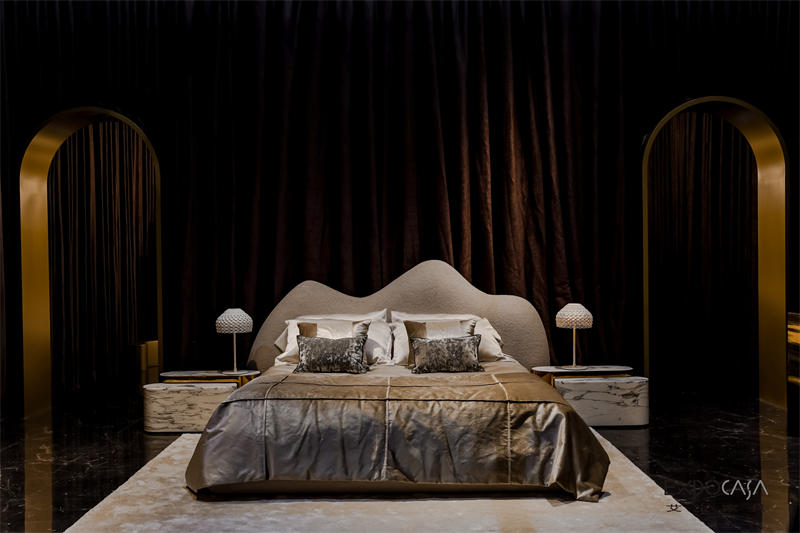 Reflecting on this collaboration, Zhang Chi praised Expocasa’s execution capability: “From initial sketches to final prototypes, over 95 % of the design vision has been realised. It demonstrates the strength and potential of Chinese manufacturers and home-grown furniture brands.” He shared new insights on the meaning of design sparked by this cross-border project. “Chinese brands must build an intellectual moat,” Zhang commented. “It is not merely about making products, but imbuing them with attitude, aesthetic vision and irreplaceable value.”
Wu Wenbo Explores Oriental Aesthetics
Reshaping Object Form Through Spatial Logic
Windsong Gallop draws inspiration from open landscapes, mountains and valleys observed by architect Wu Wenbo during his travels across Sichuan, Yunnan, Tibet, Gansu and Qinghai. He translated land contours and rock-stratum textures into geometric forms, integrating traditional Chinese Five-Elements philosophy into sofas, side tables and other furnishings.
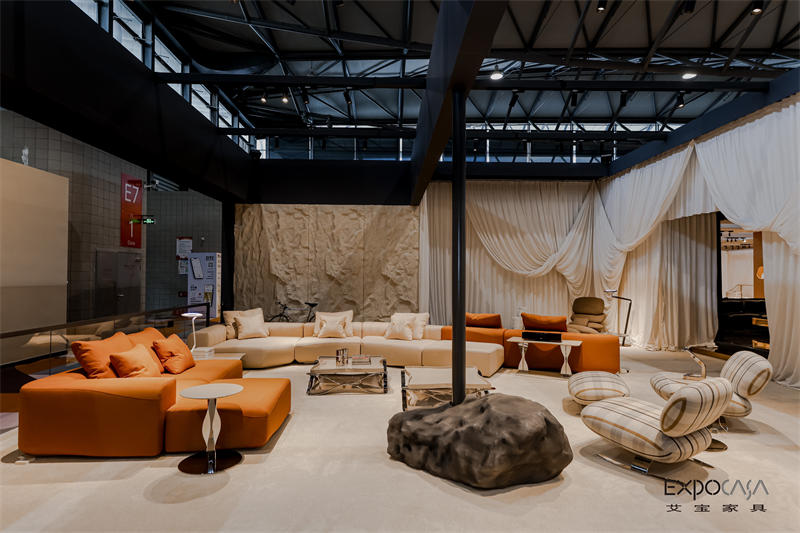 As an architect, Wu applies the mindset: “space precedes object” to furniture creation. “Architecture concerns people’s full behavioural and spiritual experience within a space. One must first understand how people inhabit a space before addressing function and aesthetics,” Wu explained.
This perspective resonates deeply with Expocasa’s design philosophy. Chen Haibo, Deputy General Manager of Expocasa, noted that high conceptual alignment underpinned the smooth partnership. “A home is like a diamond, revealing different facets from every angle,” he said. “This is why Expocasa collaborates with designers from varied backgrounds — to nurture diverse perspectives under one brand identity.”
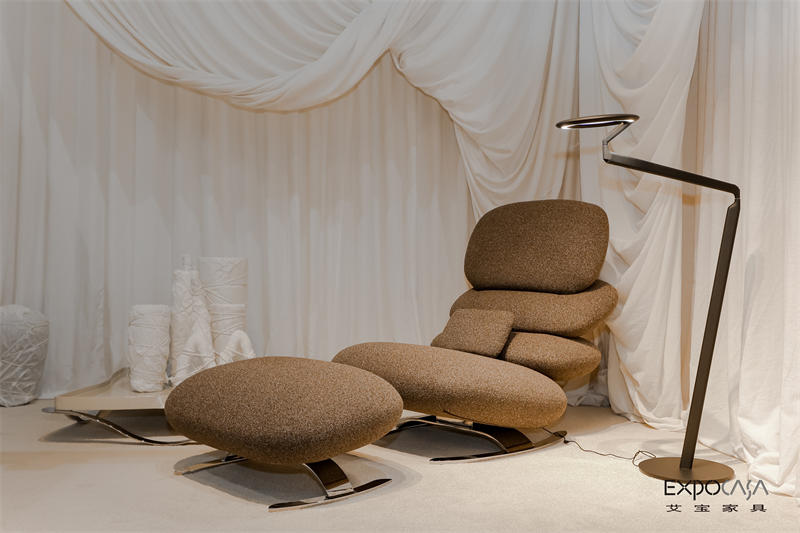 Wu Wenbo acknowledged Expocasa’s precision in realising creative concepts and rigorous attention to craft, which allowed this land-rooted design vision to come fully to life, translating architectural-grade spatial experience into everyday domestic living.
Expocasa plans to showcase signature works from its five collaborating designers in 2028, presenting the brand’s accumulated design heritage.
Balanced Manufacturing Mastery and Aesthetic Judgement
Expocasa Brings Local-born Design to the Global Arena
Expocasa’s sustained cross-border collaborations would not be feasible without its in-house production facilities. Zhang Chi’s designs called for unconventional stitching and specialty textiles, requiring production-process re-engineering. For Wu Wenbo’s works, 3D-printed physical models were iterated after 3D modelling to fine-tune critical forms. Industry attendees widely applauded the material treatments and craftsmanship of both collections at the fair, tangible proof of Expocasa’s manufacturing expertise.
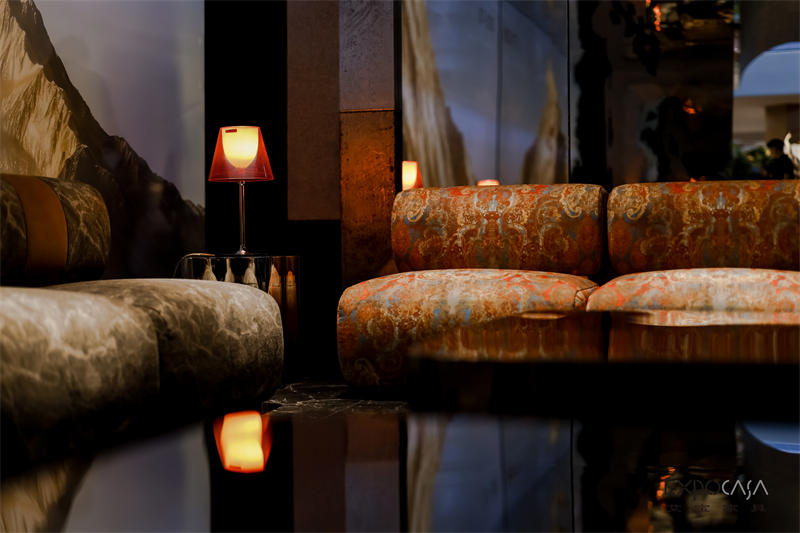 Beyond production capability, Expocasa is building its distinct aesthetic system. At the fair, Founder Wang Mingliang observed that technical craftsmanship is fundamental for China’s furniture industry, yet insufficient for global competitiveness. Prioritising neither rapid scale-up, Expocasa follows a “small, refined, exquisite” development ethos, channelling resources into R&D and craft refinement. In his view, aesthetic discernment constitutes a brand’s core strength for international markets.
 Decades of development have endowed China’s home-furnishing sector with world-class manufacturing capacity. Nevertheless, establishing a recognisable native aesthetic language remains an unmet challenge for most brands. Enabling cross-disciplinary designers to create within a unified brand framework, translating creative visions reliably via manufacturing prowess, and elevating furnishings beyond pure function to embody considered aesthetics — Expocasa’s approach may not offer a universal solution, yet it provides a valuable reference for the industry on how original design can grow systematically.
There is every reason to believe that as more Chinese brands recognise manufacturing as only the starting point and commit to sustained aesthetic investment, China’s home-furnishing sector will secure an increasingly distinct position on the global stage.
Zhang Chi Makes His Furniture-design Debut
Fashion Craftsmanship Transposed to Living Spaces
Wang Mingliang, Founder of Expocasa, mapped out a clear brand vision years ago: to embrace diverse creative voices through cross-disciplinary designers. Zhang Chi, a forward-thinking fashion designer known for cross-border thinking, came to Expocasa’s attention in 2025.
Stones sourced from disparate regions form bold, playful combinations, representing yet another leap in Expocasa’s composite-material craftsmanship after multiple rounds of refinement.
Wu Wenbo Explores Oriental Aesthetics
Reshaping Object Form Through Spatial Logic
Windsong Gallop draws inspiration from open landscapes, mountains and valleys observed by architect Wu Wenbo during his travels across Sichuan, Yunnan, Tibet, Gansu and Qinghai. He translated land contours and rock-stratum textures into geometric forms, integrating traditional Chinese Five-Elements philosophy into sofas, side tables and other furnishings.
This perspective resonates deeply with Expocasa’s design philosophy. Chen Haibo, Deputy General Manager of Expocasa, noted that high conceptual alignment underpinned the smooth partnership. “A home is like a diamond, revealing different facets from every angle,” he said. “This is why Expocasa collaborates with designers from varied backgrounds — to nurture diverse perspectives under one brand identity.”
Expocasa plans to showcase signature works from its five collaborating designers in 2028, presenting the brand’s accumulated design heritage.
Balanced Manufacturing Mastery and Aesthetic Judgement
Expocasa Brings Local-born Design to the Global Arena
Expocasa’s sustained cross-border collaborations would not be feasible without its in-house production facilities. Zhang Chi’s designs called for unconventional stitching and specialty textiles, requiring production-process re-engineering. For Wu Wenbo’s works, 3D-printed physical models were iterated after 3D modelling to fine-tune critical forms. Industry attendees widely applauded the material treatments and craftsmanship of both collections at the fair, tangible proof of Expocasa’s manufacturing expertise.
There is every reason to believe that as more Chinese brands recognise manufacturing as only the starting point and commit to sustained aesthetic investment, China’s home-furnishing sector will secure an increasingly distinct position on the global stage.


 Get password